

What's really blocking your drain?
Slow draining water, foul odours, gurgling noises, higher water bills or damp patches on an otherwise dry lawn — chances are you have a drain or pipe blockage. The first step to fixing it is understanding what's physically getting stuck down there.


Rated 5.0 by locals
4,000+
Drains cleared across Melbourne
Most common causes behind a blockage
These are the biggest culprits on the blockage-clearing jobs we do — particularly inside homes and commercial buildings. Click any cause to learn the signs, fixes and prevention.
Tree Roots
95% of clogs serviced by Australian water utilities in a 2011 study were caused by tree roots.
The most common cause behind blocked sewers — roots seek out moisture and grow straight into pipes.
Grease & Fat
The culprits behind the notorious 'fatberg' blockages.
Grease solidifies in kitchen sink drains and eventually sewer lines — threatening the whole system.
Hair
Hair combines with grease, dirt, skin flakes and soap scum in the shower, creating stubborn build-up.
Food Waste
Without a sink strainer, food particles combine with grease, hard water and hair to form a hard plug.
Wet Wipes
40% of Australian wastewater blockages in 2016–17 were caused by wet wipes.
The worst thing you can flush down the toilet — even the ones marketed as 'flushable'.
Blockage causes by plumbing fixture
A little extra care with what goes down the drain can save you from an unexpected mess. Here's what typically blocks each fixture — and how to keep it flowing.
Toilets
Not everything belongs in your toilet — and flushing the wrong items has frustrating consequences.
Toilets
Not everything belongs in your toilet — and flushing the wrong items has frustrating consequences.
Think before you flush
Stick to the essentials: poo, pee and toilet paper. Unflushables like wet wipes, feminine hygiene products, paper towels, cat litter, condoms or facial tissues remain in the pipes, accumulate debris and lead to stubborn clogs.
Sometimes it can't be helped
Excess toilet paper, kids sending toys for a swim, or mineral deposits from hard water narrowing the pipes — even careful households get blockages. Regular maintenance keeps the risk down.
Showers
Showers are notorious for blockages, thanks to a mix of hair, soap scum and hard water deposits.
Showers
Showers are notorious for blockages, thanks to a mix of hair, soap scum and hard water deposits.
Hair
Every shower sheds hair into the drain. Mixed with soap scum, it's the perfect recipe for a clog.
Soap scum & hard water
Bar soap residue combines with hard-water minerals to line your pipes and trap other debris. Regular cleaning prevents slow drainage and standing water.
Kitchen sinks
Your kitchen sink is a workhorse — and a magnet for fats, oils and food scraps.
Kitchen sinks
Your kitchen sink is a workhorse — and a magnet for fats, oils and food scraps.
Fats, greases and oils
Grease solidifies as it cools, lining the pipes and trapping food particles. Pour leftover grease into a container instead, and clear your grease trap regularly.
Bin it, don't block it
Don't scrape plates into the sink. A sink strainer catches rogue food particles before they become a clog.
Bathroom vanities
Bathroom basins face many of the same issues as showers.
Bathroom vanities
Bathroom basins face many of the same issues as showers.
Bar soap
Soap re-solidifies in cooler water and reacts with hard-water minerals to form soap scum — a sticky residue that clings inside pipes and builds up over time.
Hair, dirt and shaving
Shaving or brushing hair over the sink sends clog material straight down. A drain catcher and regular hot-water rinses keep build-up at bay.
Laundry drains
An unexpected spot for blockages — often from sneaky items left in pockets.
Laundry drains
An unexpected spot for blockages — often from sneaky items left in pockets.
Lint, pet hair and debris
Pet hair, lint and stray coins easily clog laundry sinks and washing machine drains. Be cautious pouring mop water down the drain — dirt settles and builds up, and paint or chemicals cause serious blockages.
Sewers & stormwater
Sometimes the blockage comes from things beyond your control.
Sewers & stormwater
Sometimes the blockage comes from things beyond your control.
Rain, roots and foreign objects
Heavy rain floods stormwater systems with dirt, rocks and debris. Tree roots seek out the water in your pipes, and anything from grease to foreign objects can back up your sewer line.
Myths about drain cleaning
There's plenty of misinformation about what clogs drains and how to keep them clear. Let's set it straight.
“Flushable” wet wipes are actually flushable.
They're not. Wipes marketed as flushable don't disintegrate like toilet paper — they're one of the biggest causes of blockages in Australia. Please never flush them.
All drain cleaning chemicals are safe and will fix a clog.
Some do almost nothing; others eat through the blockage and your pipes. If you want the clog gone without damaging your drainage system, call a professional with the right knowledge and tools.
Drain clogs will unclog themselves.
Only some clogs made of water-soluble material may clear themselves — and it's a risky gamble. Blockages usually grow, and the pressure can cause backups or even burst a pipe. Book a camera inspection early.

Ready when your drains aren't.
No call-out fee, CCTV diagnosis and same-day clearing — backed by the Flow Safe Plumbing team.
Tips to really maintain your drains
Two of the most overlooked culprits — and how to stay ahead of them.
Stop blockages caused by soap scum
That slimy film around your shower or sink drain? Soap scum. Bar soaps contain fats and oils that solidify in pipes, especially in cold water.
Liquid soaps rinse away far more easily without the sticky residue. If bar soap is still your pick, use a sink strainer to catch clumps (it catches hair too) and pour hot water down the drain occasionally to dissolve stuck soap.
Stop build-up from mineral deposits
In hard water areas, pipes build up layers of mineral deposits that narrow the flow and make clogs easier to form.
A water softener prevents deposits at the source. No softener? Flush drains monthly with hot water or vinegar and baking soda. For established build-up, professional descaling breaks down deposits without damaging your pipes.
It might be pipe damage, not a blockage
Pipe damage can mimic the symptoms of a clogged drain. If your drains keep playing up even after cleaning, one of these could be the real cause.
Collapsed pipes
Age, tree roots, shifting soil or corrosion can collapse a pipe — and no amount of drain cleaning will clear it.
About collapsed pipesCracked pipes
Small cracks grow, leak, and let dirt, debris and roots in — causing localised blockages and damp spots.
About cracked pipe repairsSloped pipes
Too shallow and waste won't flow; too steep and solids get left behind. Bad slope feels like a constant clog.
Book an inspectionMisaligned pipes
Ground movement loosens joints, letting debris in and creating a blockage-like effect — often hidden underground.
Book an inspectionBelly in pipes
A sagging section collects water and waste at a low point, hardening into serious blockages over time.
About sewer damageBad installation
Newer home with frequent drain issues? Poor installation causes misaligned connections and improper slopes.
Book an inspectionHeavy rainfall
Shifting soil and overflowing stormwater put pressure on weakened pipes — what looks like a block may be external pressure.
Book an inspection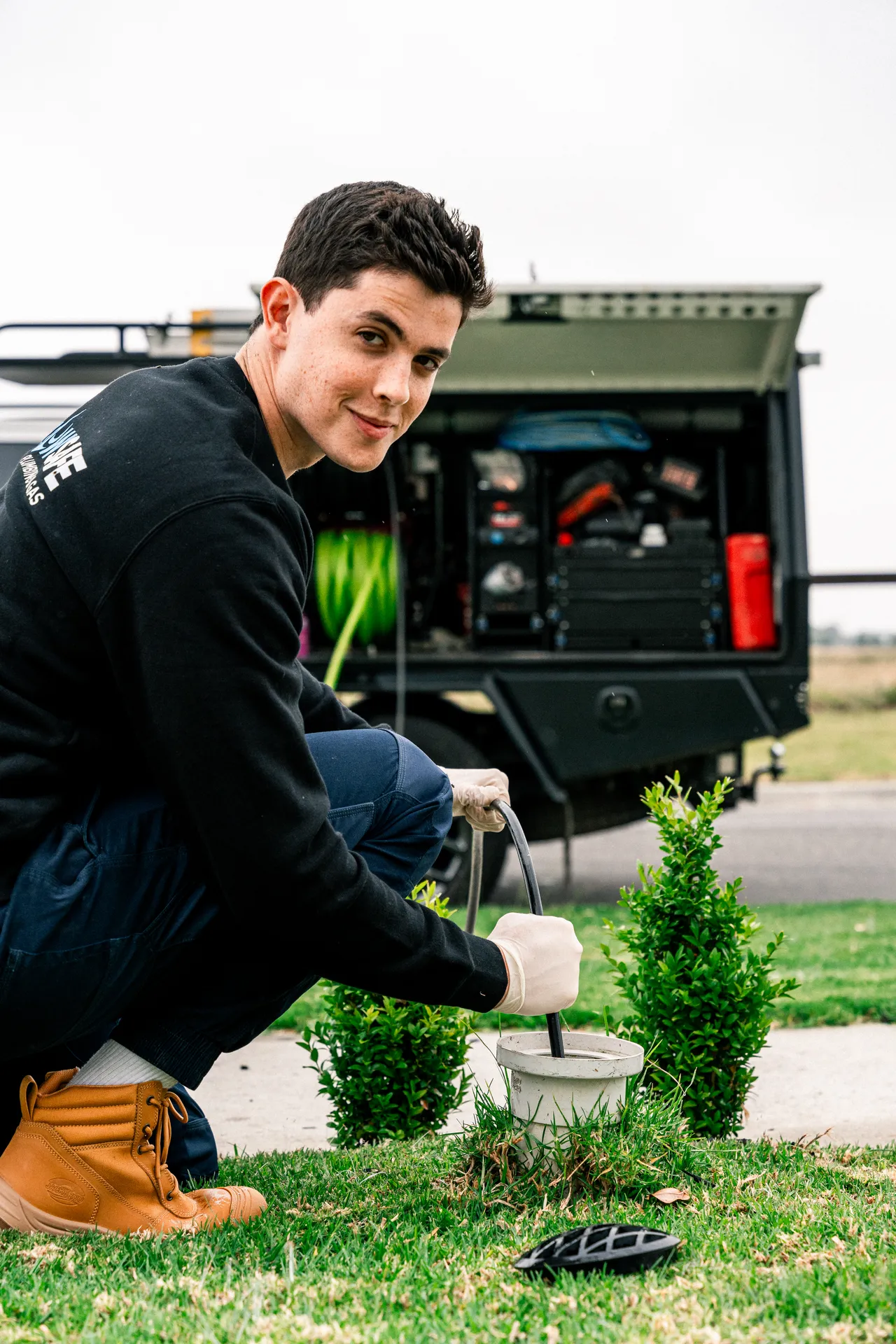
Take the guesswork out with CCTV imaging
With advanced CCTV camera technology, our expert plumbers show you exactly what's behind the block — or what the damage looks like if it isn't a clog. We show you the inside of your drain and analyse the footage together, keeping you informed and part of the journey.
After evaluating the problem on site, we provide our recommended course of action and a transparent quote to solve the issue.
Why wait? Call Mr Drainage at any hour.
Our 24/7 team is ready to restore your drains to their pre-blockage condition - no matter the scale. Avoid costly damage and get a fast response today.